
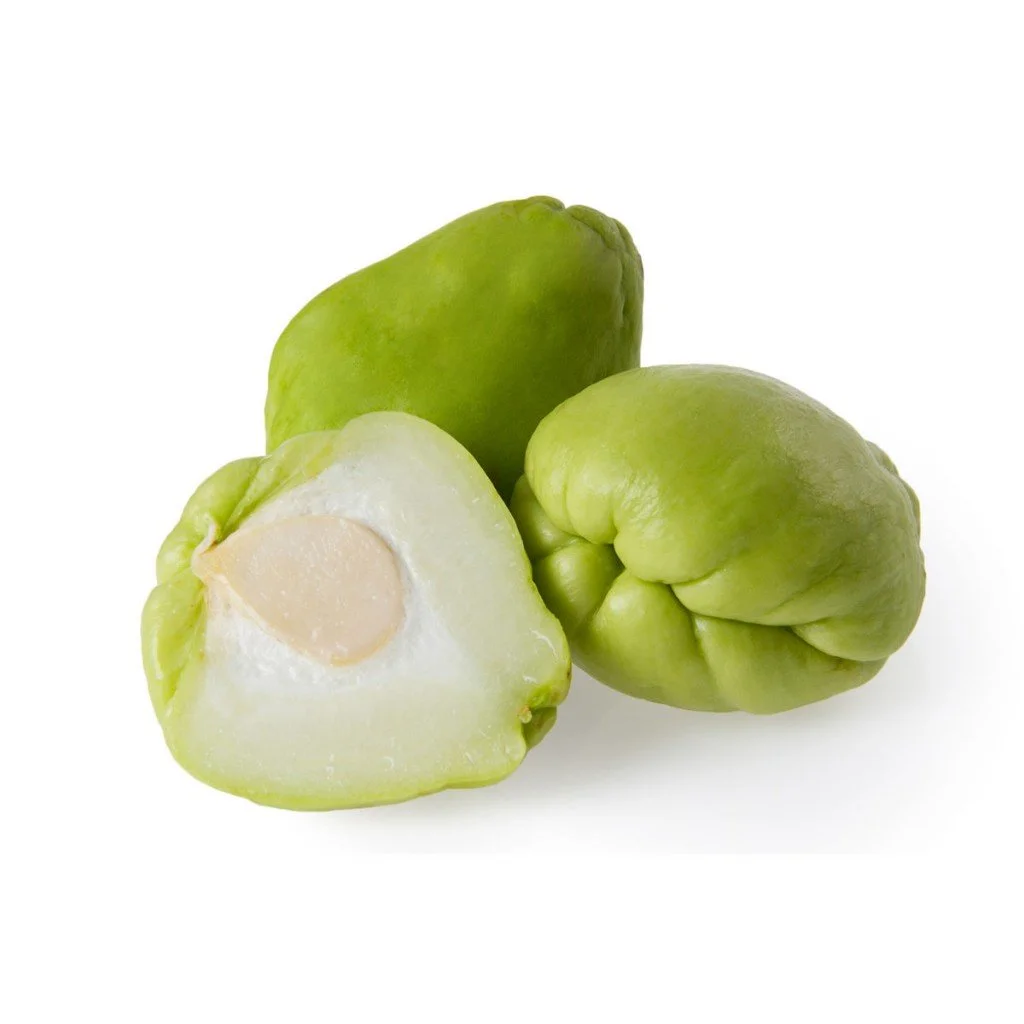
Chayote
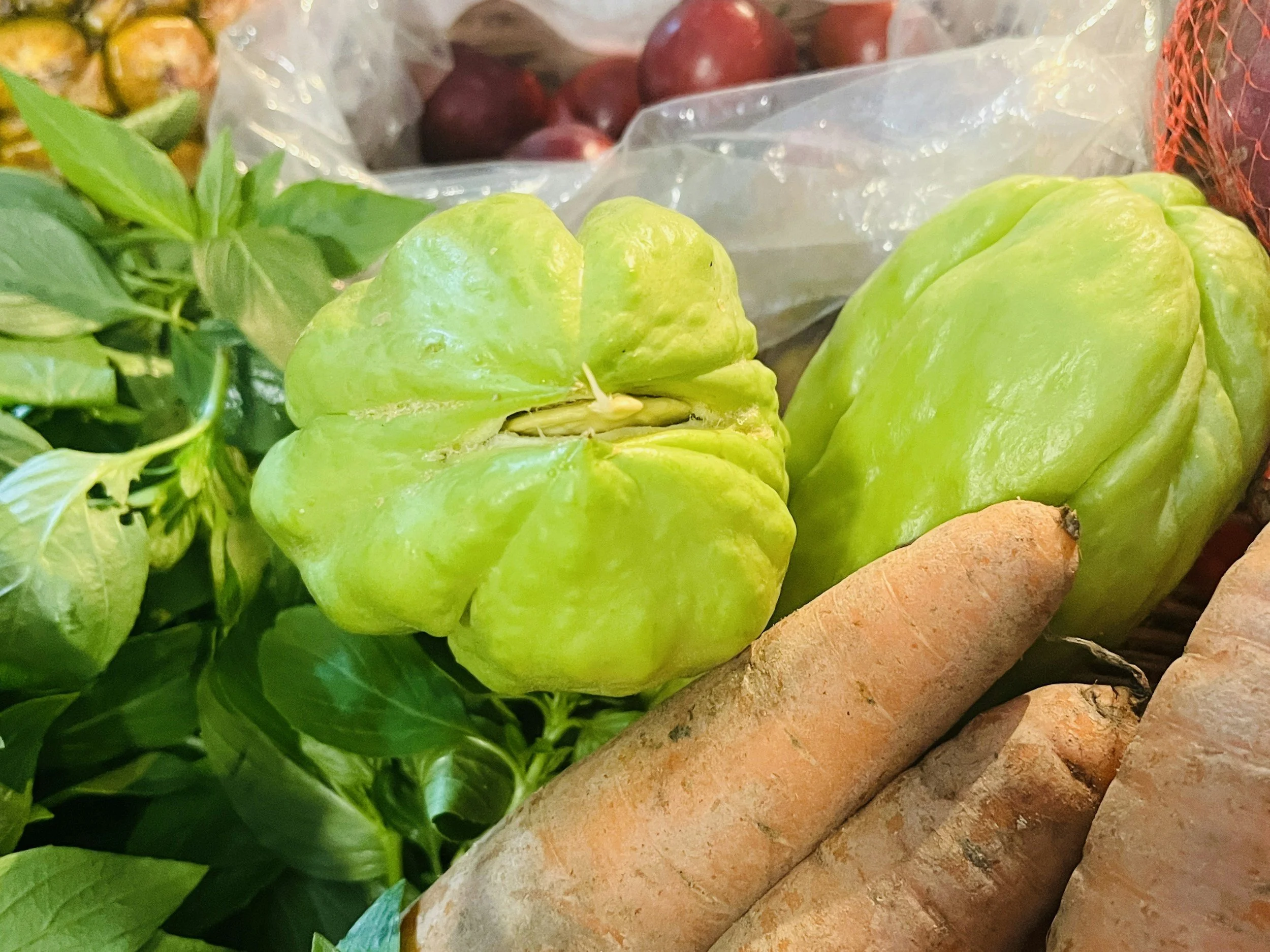
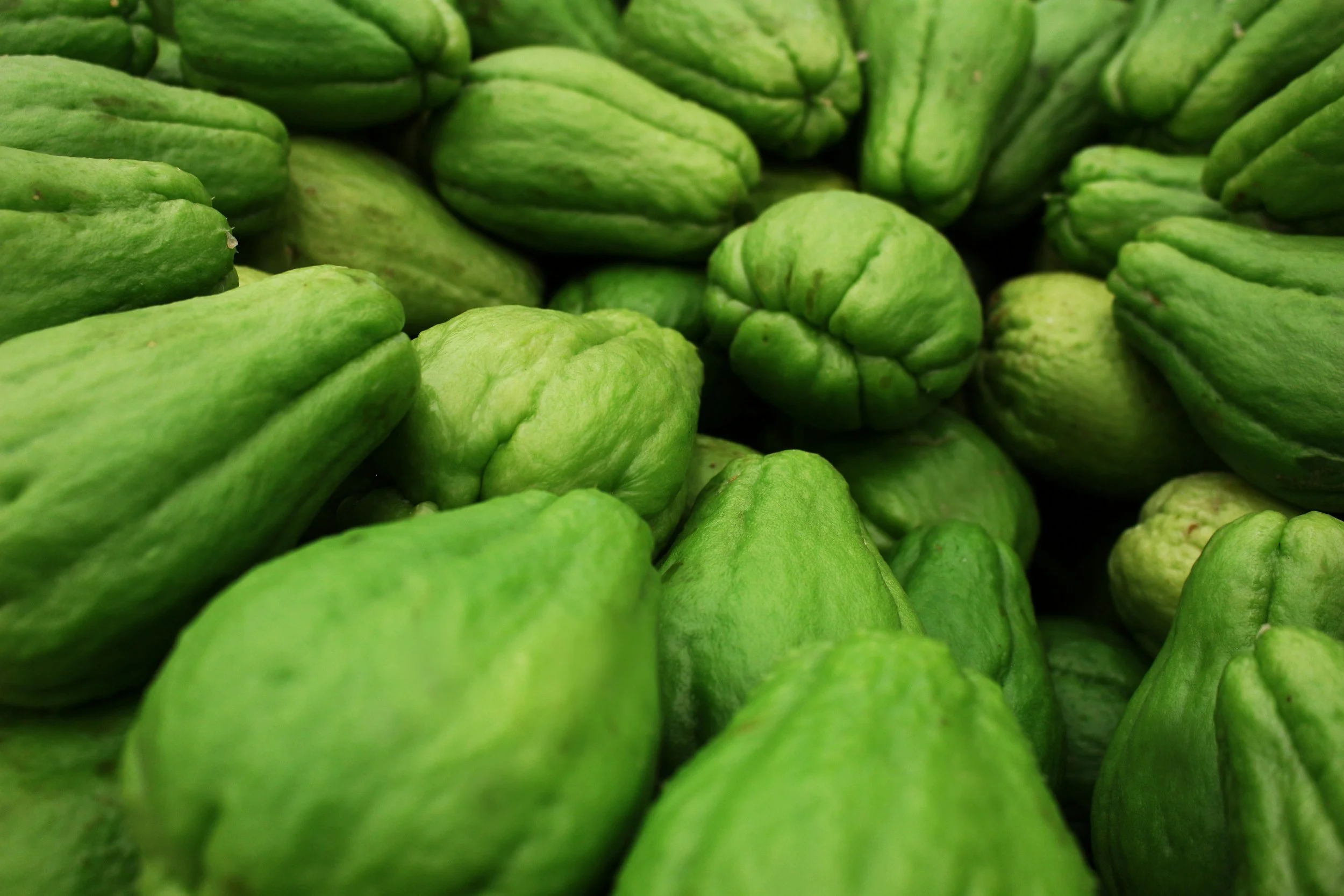
Chayote, also known as vegetable pear or mirliton, is a nutritious and versatile vegetable belonging to the Sechium edule species of the Cucurbitaceae family. Known for its distinctive pear-like shape, smooth or slightly wrinkled light green skin, crisp texture, and mild, slightly sweet flavor, chayote is widely cultivated in tropical and subtropical regions, particularly throughout Central America, the Caribbean, and Latin America. Carefully harvested while young and tender, each fruit typically measures approximately 10–20 cm in length and 7–12 cm in diameter, depending on the variety and growing conditions. Its delicate flavor and ability to absorb seasonings make it ideal for sautéing, roasting, steaming, soups, stews, salads, and a variety of traditional dishes.
Health Benefits
Low in calories — Naturally low in calories and fat, making it an excellent addition to balanced meals and lighter dishes.
Good source of dietary fiber — Supports healthy digestion, promotes fullness, and contributes to overall digestive wellness.
Provides essential vitamins & minerals — Including vitamin C, folate, potassium, and manganese, which support immune function, normal cellular activity, and overall wellness.

Parameter
Temp. 0–2°C (32–36°F)
Shelf Life 7-14 days
Pallet 300-320 Boxes
Relative Humidity 95-100%
Temp. 0–2°C (32–36°F) Shelf Life 7-14 days Pallet 300-320 Boxes Relative Humidity 95-100%
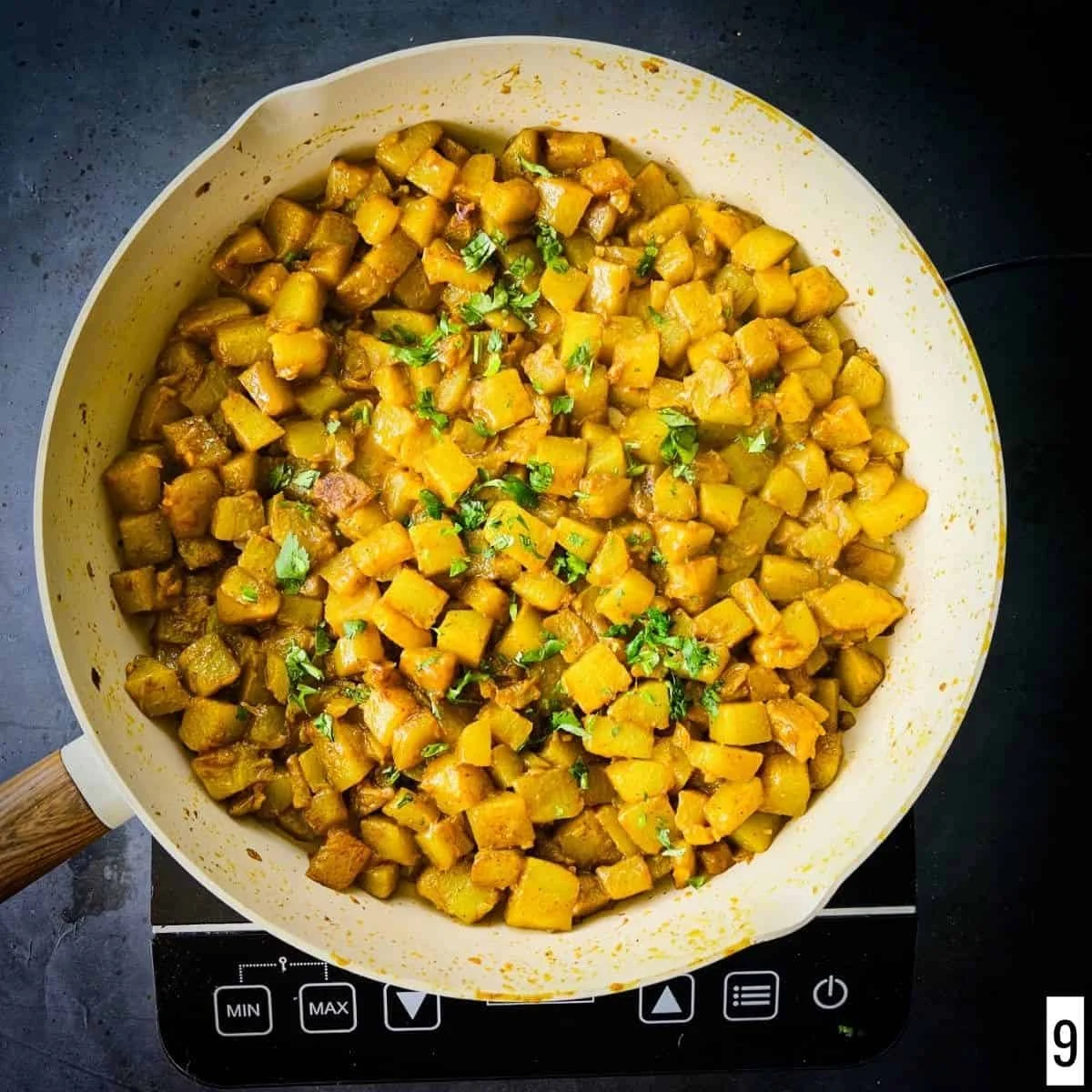
Chayote Squash Subzi

-
2 medium chayote squash, peeled and diced
2 tablespoons vegetable oil or ghee
1 teaspoon cumin seeds
½ teaspoon mustard seeds
1 medium onion, finely chopped
2 cloves garlic, minced
1 teaspoon fresh ginger, grated
1 medium tomato, finely chopped
1 green chili, finely chopped (optional)
½ teaspoon ground turmeric
1 teaspoon ground coriander
½ teaspoon ground cumin
½ teaspoon red chili powder (adjust to taste)
½ teaspoon garam masala
½ teaspoon salt (or to taste)
¼ cup water
2 tablespoons fresh cilantro, chopped
Optional for Extra Flavor
½ teaspoon asafoetida (hing) for a traditional Indian flavor
8–10 fresh curry leaves
½ teaspoon amchur (dried mango powder) for a tangy finish
¼ cup fresh or frozen green peas
1 tablespoon fresh lemon juice
Optional for Serving
Warm chapati or roti
Steamed basmati rice
Naan bread
Plain yogurt or cucumber raita
Fresh lemon wedges
Chef's Tip: Chayote squash has a naturally mild flavor that absorbs Indian spices beautifully. Cut it into evenly sized cubes to ensure consistent cooking. For a traditional dry-style subzi, cook uncovered during the final few minutes to allow excess moisture to evaporate while keeping the squash tender but not mushy.
-
Prep Time: 15 minutes Cook Time: 20–25 minutes Servings: 4 Difficulty: Easy
1. Prepare the Chayote Squash: Wash the chayote squash thoroughly under cold running water. Peel the skin, remove the seed if desired, and cut the flesh into evenly sized cubes, approximately ½ inch thick, to ensure consistent cooking.
2. Heat the Oil: In a large skillet or heavy-bottomed pan, heat the vegetable oil or ghee over medium heat until hot.
3. Temper the Spices: Add the cumin seeds and mustard seeds to the hot oil. Allow them to sizzle for approximately 30–60 seconds until fragrant. If using curry leaves or asafoetida, add them at this stage.
4. Sauté the Aromatics: Add the finely chopped onion and cook for approximately 3–4 minutes, stirring occasionally, until softened and lightly golden. Stir in the minced garlic, grated ginger, and green chili, cooking for another minute until fragrant.
5. Add the Tomatoes: Add the chopped tomato to the skillet and cook for approximately 3–4 minutes, stirring occasionally, until softened and slightly broken down.
6. Incorporate the Spices: Sprinkle in the turmeric, ground coriander, ground cumin, red chili powder, and salt. Stir well and cook for approximately 30 seconds to release the spices' flavors without burning them.
7. Add the Chayote Squash: Add the diced chayote to the skillet and gently toss until evenly coated with the aromatic spice mixture. Cook for approximately 2–3 minutes, stirring occasionally.
8. Simmer Until Tender: Pour in ¼ cup of water and stir gently. Cover the skillet with a lid and reduce the heat to medium-low. Allow the chayote to cook for approximately 10–12 minutes, stirring occasionally, until tender but still slightly firm.
9. Adjust the Consistency: Remove the lid and continue cooking for another 2–3 minutes to allow any excess moisture to evaporate. For a traditional dry-style subzi, the vegetables should be lightly coated in spices without excess liquid.
10. Add the Finishing Spices: Sprinkle the garam masala over the cooked chayote and gently stir to combine. If desired, add amchur or fresh lemon juice for a subtle tangy flavor.
11. Garnish and Serve: Turn off the heat and sprinkle freshly chopped cilantro over the subzi. Transfer to a serving dish and garnish with additional cilantro or fresh lemon wedges.
12. Serve and Enjoy: Serve the chayote squash subzi warm alongside freshly made chapati, roti, naan, or steamed basmati rice. Pair with plain yogurt or cucumber raita for a balanced and flavorful meal.
Chef's Tip: For the best texture, avoid overcooking the chayote. It should be tender enough to pierce easily with a fork while maintaining its shape. For additional flavor and color, add green peas during the final 5 minutes of cooking.
-
CULTURE
Besides being used in gastronomy, with the stems of chayote plant are made baskets, hats and many other traditional tools in some regions. In order to promote this fruit and its benefits, it is held the National Fair of Chayote in Ujarrás (Costa Rica), where can be found a lot of cultural and gastronomic activities of chayote.
ORIGIN
From Mexico and Central America. The main producers are Costa Rica, Guatemala and Mexico, but also could come from Dominican Republic, Brazil and Peru.