
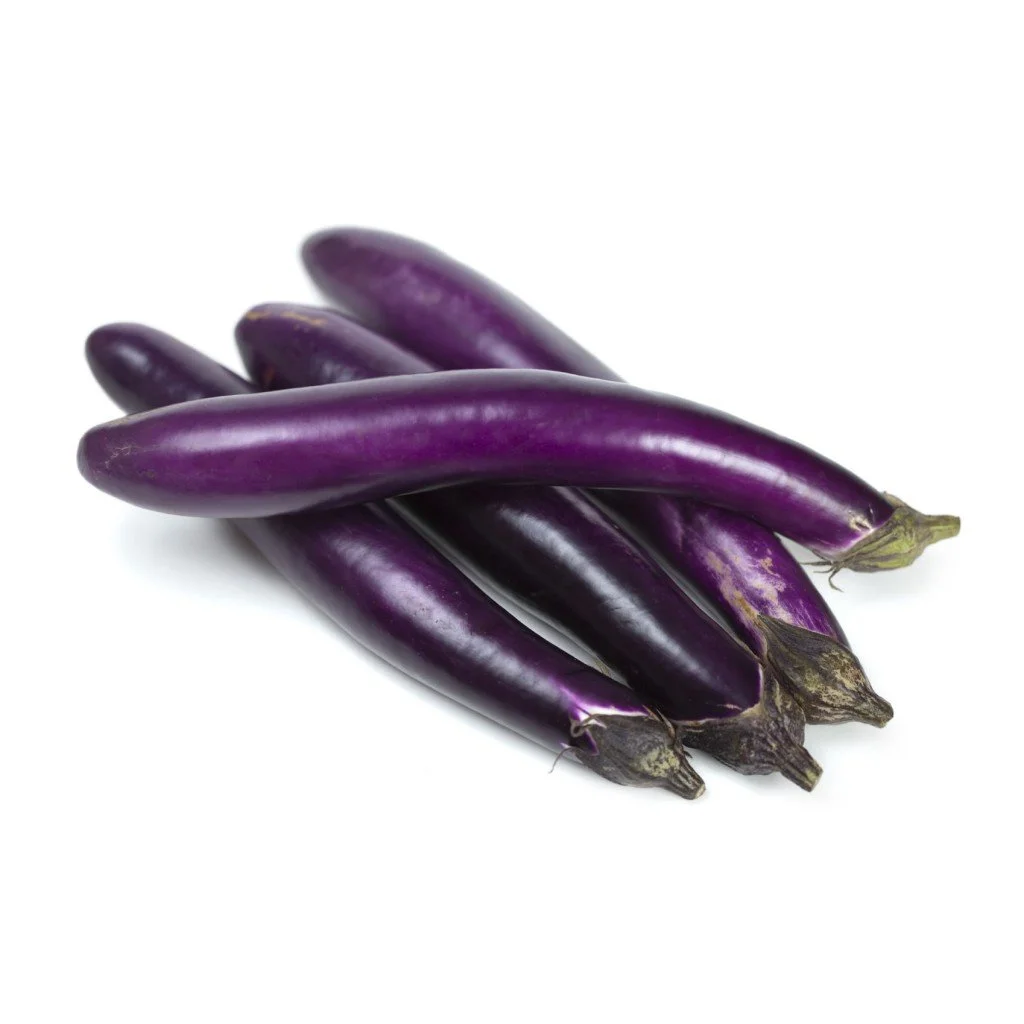
Chinese Eggplant
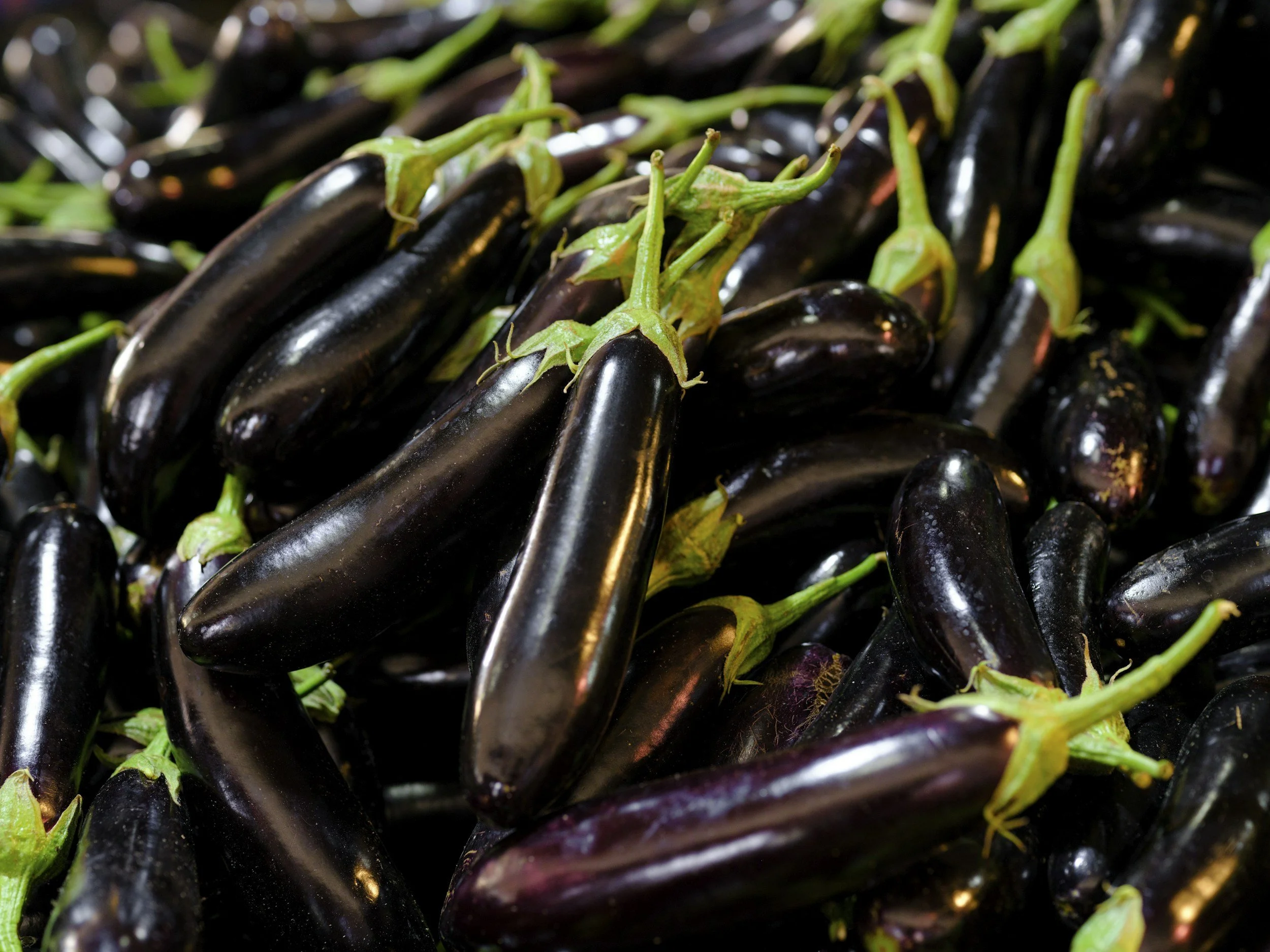
Chinese eggplant is a versatile vegetable belonging to the Solanum melongena species of the Solanaceae family. Known for its long, slender shape, smooth purple skin, tender flesh, and mild, slightly sweet flavor, Chinese eggplant has fewer seeds and a more delicate texture than traditional globe eggplants. Carefully harvested while young and tender, each eggplant typically measures approximately 20–35 cm in length and 3–5 cm in diameter, depending on the variety. Its soft texture and ability to absorb flavors make it ideal for stir-fries, grilling, roasting, steaming, and a variety of Asian-inspired dishes.
Health Benefits
Rich in antioxidants — Contains beneficial compounds, including anthocyanins in its purple skin, that help protect cells from oxidative stress.
Good source of dietary fiber — Supports healthy digestion and helps promote fullness.
Provides essential vitamins & minerals — Including potassium, manganese, folate, and vitamin B6, which contribute to normal cellular function, metabolism, and overall wellness.

Parameter
Temp. 0–2°C (32–36°F)
Shelf Life 7-14 days
Pallet 300-320 Boxes
Relative Humidity 95-100%
Temp. 0–2°C (32–36°F) Shelf Life 7-14 days Pallet 300-320 Boxes Relative Humidity 95-100%
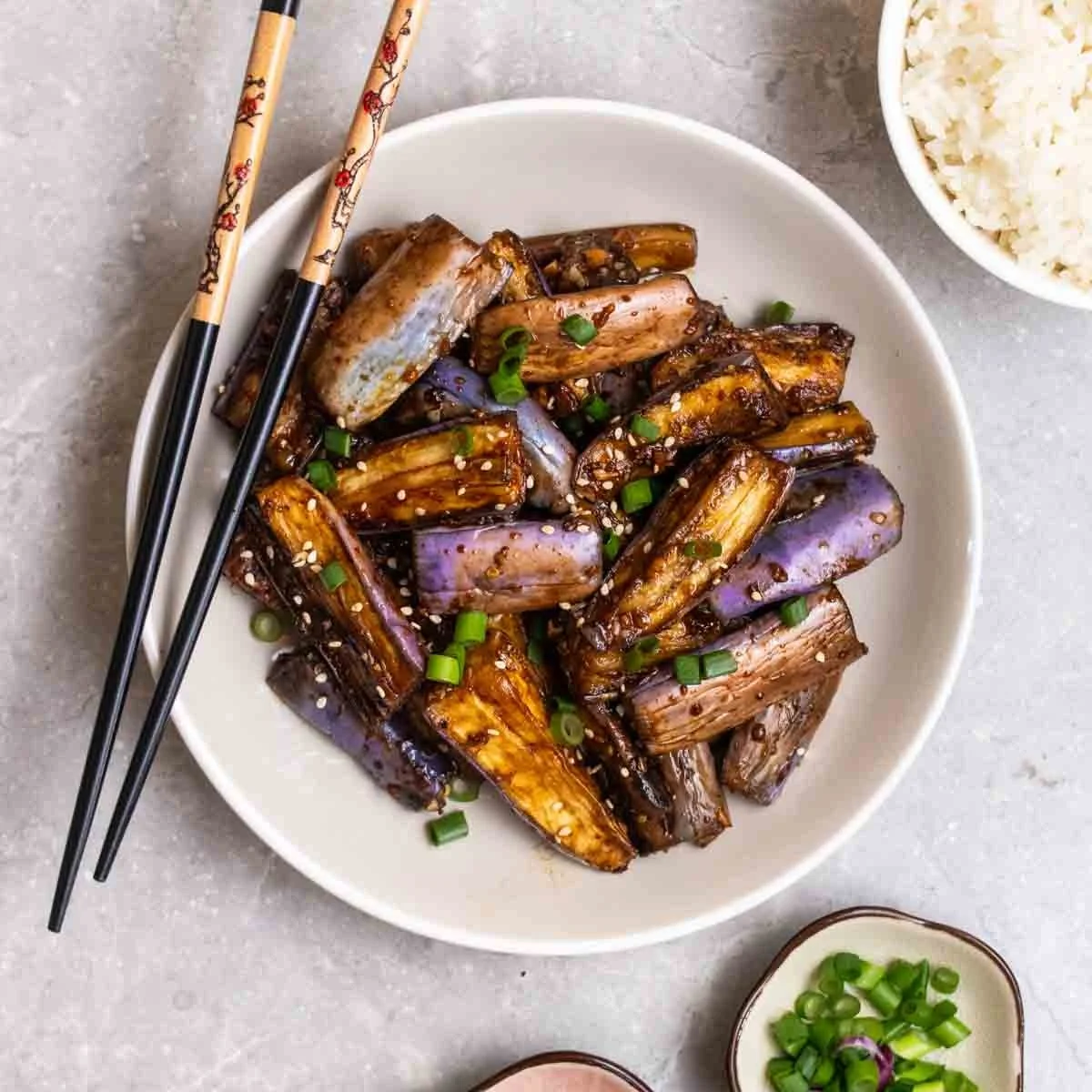
Stir Fried Eggplant

-
For the Stir-Fried Eggplant
3 medium Chinese eggplants (approximately 1½ lbs)
3 tablespoons vegetable oil
5 cloves garlic, minced
1 tablespoon fresh ginger, minced
3 green onions, chopped
½ teaspoon red pepper flakes (optional)
1 teaspoon sesame seeds (optional, for garnish)
For the Garlic Sauce
3 tablespoons low-sodium soy sauce
1 tablespoon oyster sauce
1 tablespoon rice vinegar
1 tablespoon brown sugar
1 teaspoon sesame oil
½ cup water or vegetable broth
1 tablespoon cornstarch
Optional for Serving
Steamed jasmine rice
Brown rice
Fresh cilantro
Additional sliced green onions
Chef's Tip: Chinese eggplants have tender skin and fewer seeds than traditional eggplants, making them ideal for stir-frying. Cut them into evenly sized pieces to ensure consistent cooking and a soft, flavorful texture.
-
Prep Time: 15 minutes Cook Time: 15–20 minutes Servings: 4
1. Prepare the Eggplant: Wash the Chinese eggplants thoroughly and trim the ends. Cut them into approximately 2-inch-long pieces, then slice each piece lengthwise into quarters for even cooking.
2. Prepare the Garlic Sauce: In a small bowl, whisk together the soy sauce, oyster sauce, rice vinegar, brown sugar, sesame oil, water or vegetable broth, and cornstarch until smooth. Set aside.
3. Heat the Pan: Heat 2 tablespoons of vegetable oil in a large skillet or wok over medium-high heat until hot.
4. Cook the Eggplant: Add the eggplant pieces in a single layer, working in batches if necessary. Stir-fry for approximately 6–8 minutes, turning occasionally, until the eggplant becomes tender and lightly golden. Add a splash of water if needed to help soften the eggplant without using excessive oil.
5. Sauté the Aromatics: Push the eggplant to one side of the pan or temporarily remove it. Add the remaining tablespoon of vegetable oil, followed by the minced garlic, ginger, and white portions of the green onions. Sauté for approximately 30–60 seconds until fragrant, being careful not to burn the garlic.
6. Add the Garlic Sauce: Stir the prepared sauce again to redistribute the cornstarch, then pour it into the skillet. Toss the eggplant gently to ensure every piece is evenly coated.
7. Simmer Until Thickened: Reduce the heat to medium and cook for another 2–3 minutes, stirring occasionally, until the sauce thickens into a glossy glaze and the eggplant is completely tender.
8. Add the Finishing Touches: Sprinkle in the red pepper flakes for a touch of heat, if desired. Add the remaining chopped green onions and gently toss to combine.
9. Garnish and Serve: Transfer the stir-fried eggplant to a serving dish and garnish with sesame seeds, fresh cilantro, or additional green onions.
10. Serve and Enjoy: Serve immediately over steamed jasmine rice or brown rice for a flavorful, satisfying meal.
Chef's Tip: For the best texture, avoid overcrowding the skillet. Cooking the eggplant in batches allows it to develop a lightly caramelized exterior while maintaining a soft, tender interior.
-

CULTURE
The Loomis Eggplant Festival is held in California during the month of October. The festival has no shortage of fun activities, including a cooking contest where the star ingredient is this vegetable and a video competition which aims to create ads for presenting the festival.

ORIGIN
Its origin comes from Asia, including India and China, which is why it got its name. Throughout history, this vegetable has been mentioned in numerous botanical manuscripts where information on changes that have occurred in the shape and size of the different varieties of Chinese eggplant has been reported over time.